We leave Batna in the early morning, around 9 a.m. The sky is clear, the light already firm but not yet harsh, and the distant sounds of the city still linger in the background — a final echo before the landscape begins to take over. Traffic follows its usual Algerian logic — a form of organised chaos. Dense, alive, but somehow efficient. We move forward without difficulty.
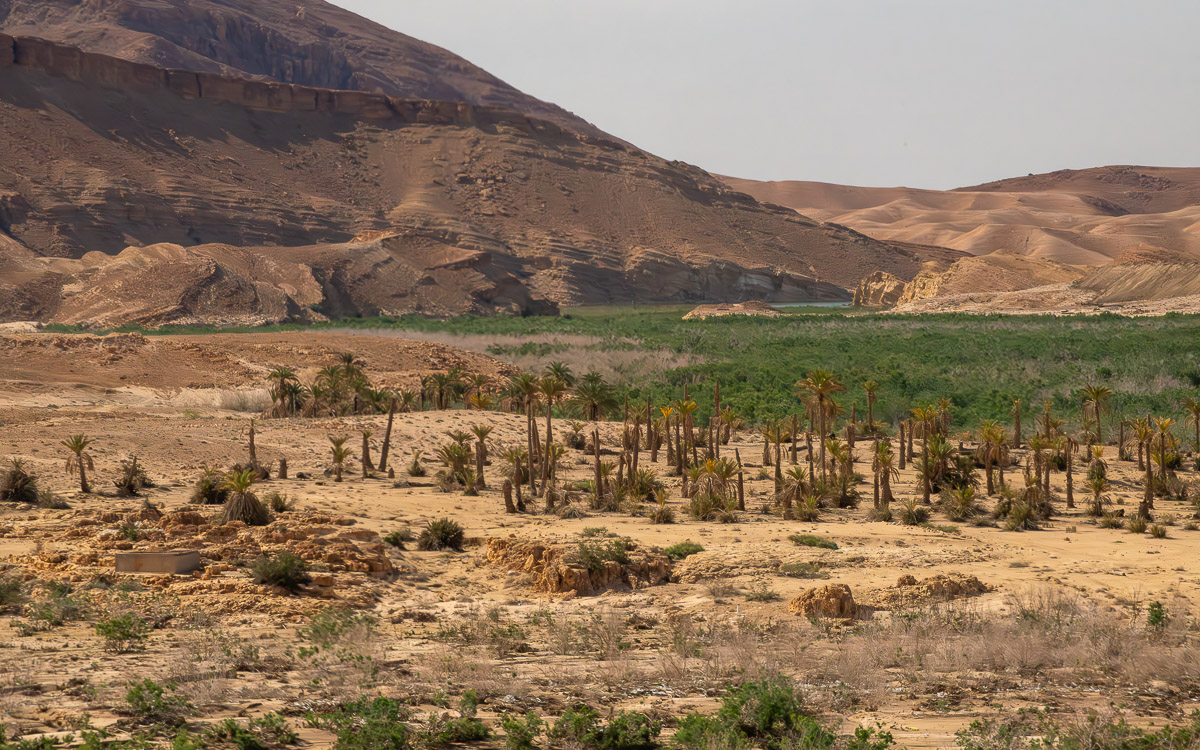
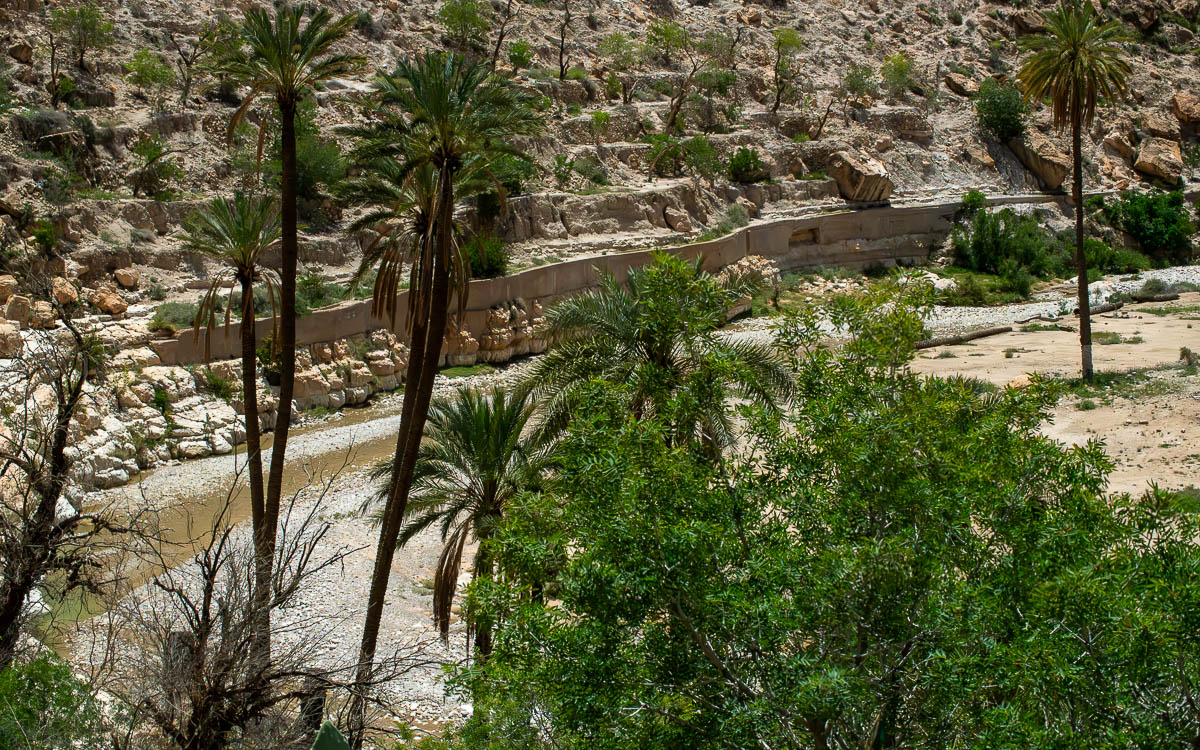
Very quickly, the urban landscape loosens its grip and fades away. The road begins to follow a river at the bottom of a wide valley. The land becomes more arid, more mineral, yet never empty. A few dirt tracks, scattered houses, signs of life carefully anchored along the water. It is one of those landscapes that looks harsh at first glance, but reveals its balance as soon as you slow down and observe.
We stop at a viewpoint overlooking a green valley where trees, grass, and a handful of countryside homes coexist quietly, almost discreetly. Moments like this always strike me. The visible work of water, and what it allows life to become, is endlessly fascinating.
Inside the car, conversation never really stops, but it gradually shifts tone. With Sofiane and Rabah, we talk about film production, logistics, access, and potential. They keep telling me, “Wait until you see Ghoufi — it’s absolutely breathtaking.” I am already in scouting mode. I always am. I imagine stories, camera angles, crew movement, proximity to Batna, and what kind of productions could realistically exist here.
The Aurès Region — Where Ghoufi Belongs
Ghoufi Canyon lies within the Aurès, one of Algeria’s most distinctive and historically rich regions. This mountainous territory marks a natural transition between the Mediterranean north and the Sahara to the south. Harsh, mineral, and deeply sculpted by time, the Aurès has long shaped resilient ways of life adapted to altitude, water scarcity, and isolation.
Known as the heartland of the Chaoui people, the region carries a strong cultural identity and a long memory — from ancient settlements and Roman presence to its pivotal role in modern Algerian history. Landscapes here are never neutral backdrops: they are active forces that dictate movement, architecture, and survival.
Ghoufi is one of the most striking expressions of the Aurès. The canyon concentrates everything the region represents — stone, water, human adaptation, and scale — making it not only a spectacular natural site, but a key to understanding the territory it belongs to.
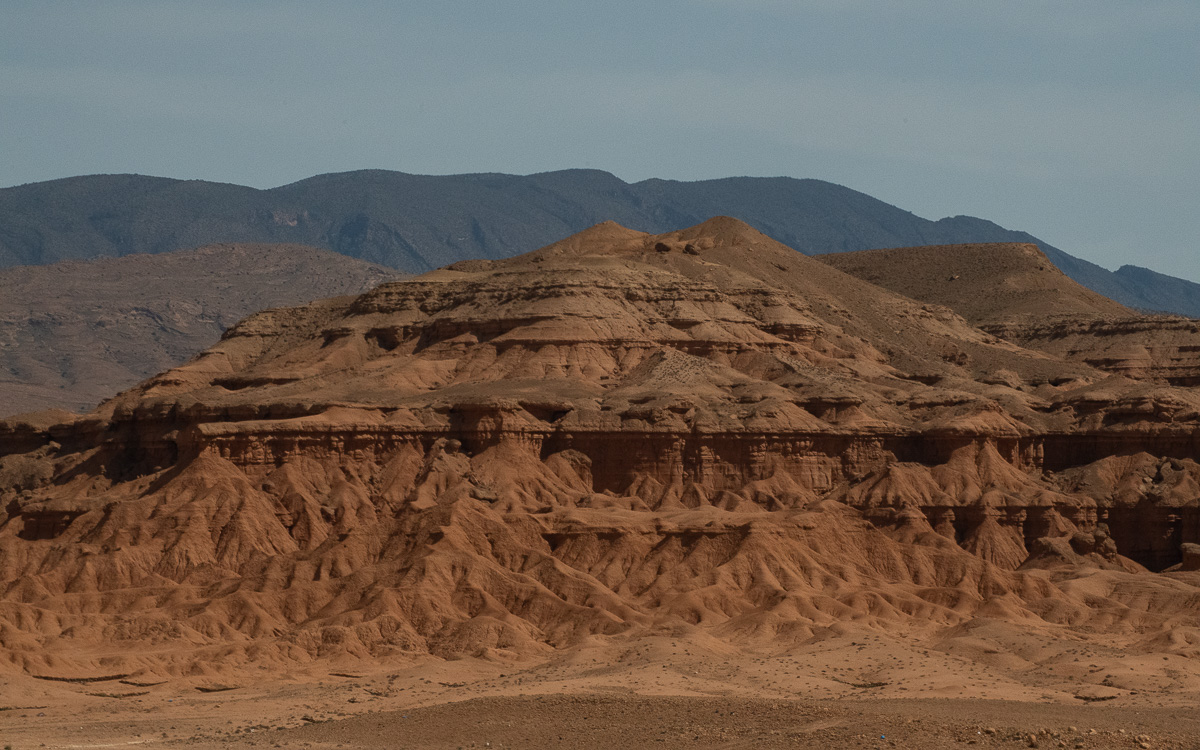
Then, without warning, the land opens. By this point, we have already covered close to a hundred kilometres since leaving Batna, stopping several times along the way to admire the landscape, take photographs, and capture video. The mountains stretch far into the horizon, wide and dry, with a scale that feels almost unreal. At times, it feels like we could be in a classic cowboy film — the kind of open terrain that instantly brings to mind southern Argentina or Patagonia, where space dominates everything and the human presence feels small but deeply connected to the land.
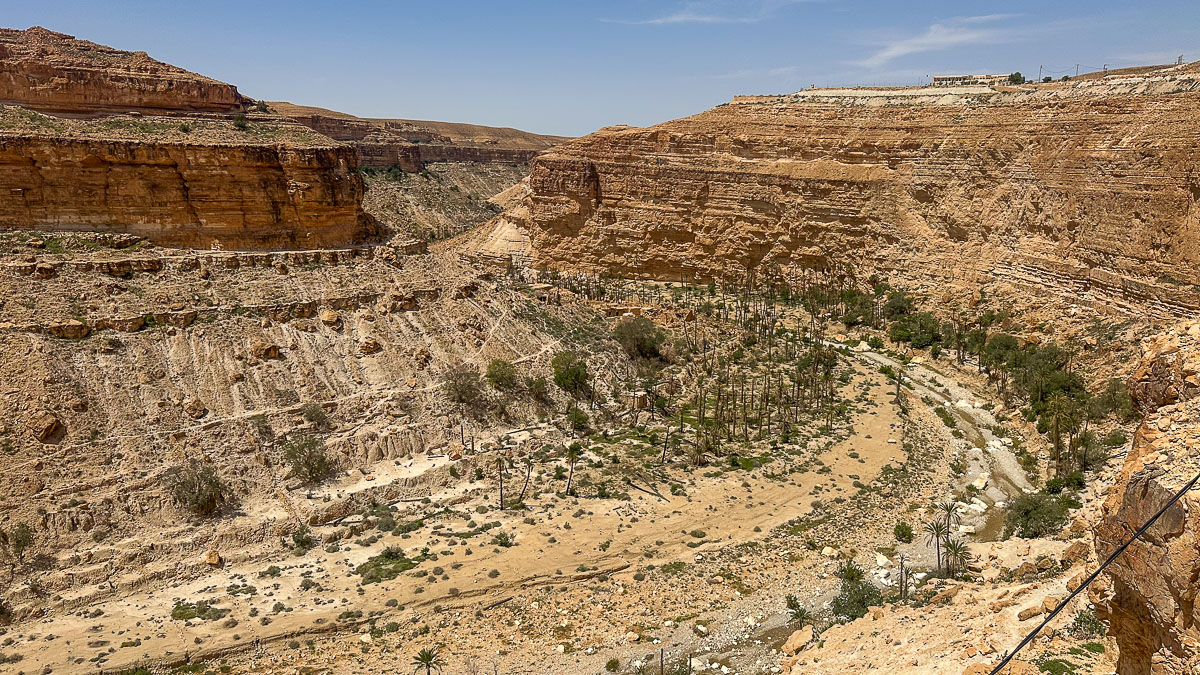
The Ghoufi canyon first appears as a massive depression in the landscape — a deep scar carved into the valley floor, visible several kilometres away. At this distance, the depth is still abstract, but the scale is undeniable. You immediately know this is not just another viewpoint.
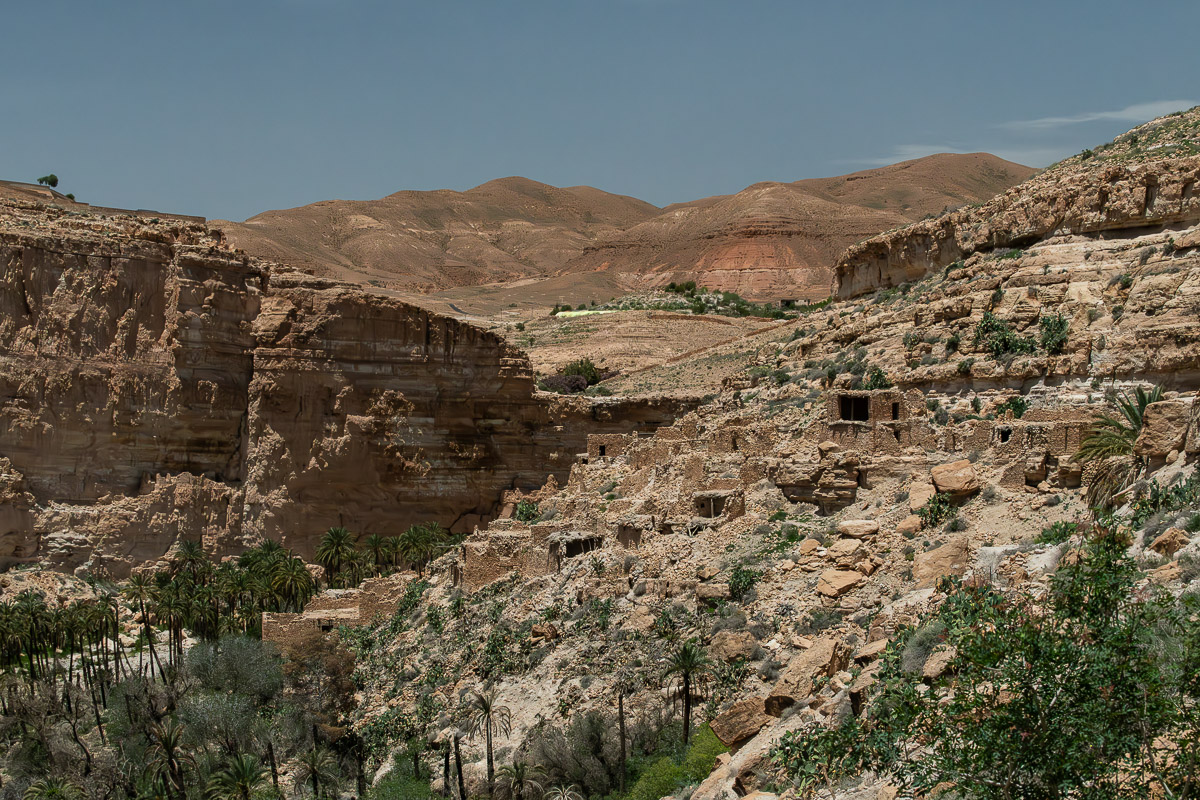
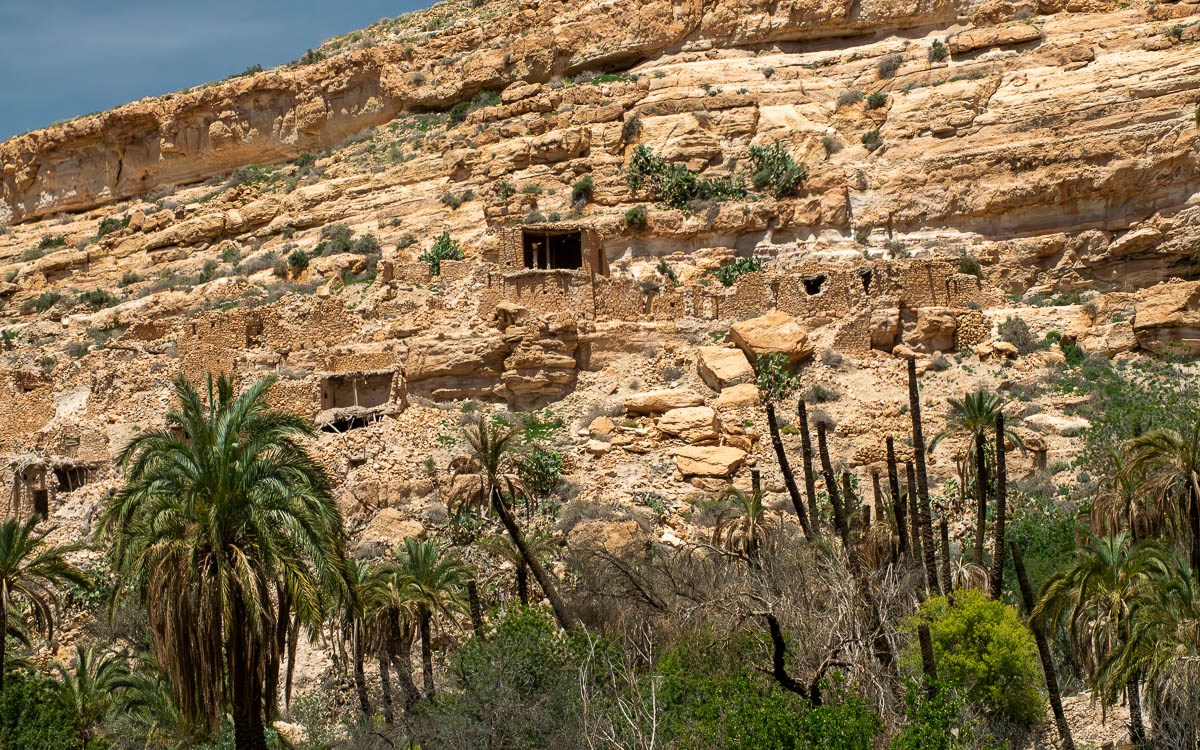
When I finally reach the edge of the canyon, my instinct is immediate: I move closer. To feel the vastness. Far below, I notice an abandoned village clinging to the canyon walls. Dozens of houses, narrow paths — almost streets — carved into the rock. I start imagining the people who once lived there. How difficult daily life must have been. How isolated. How self-sufficient they needed to be in a time when the outside world was rarely seen.

I already know I want to go down. My colleagues smile and say, “This is only the beginning.” They are right. There are other access points ahead, each one offering a different, equally striking perspective. Soon enough, we will descend through another entrance — just as spectacular.
At the top of the canyon, the parking areas are well organised. As we begin our descent, only one small kiosk is open. The exchange is simple, human, unforced. In Algeria, relationships matter. As a tourist, people will sell you something. As a visitor who is genuinely curious, respectful, and interested, conversations open up naturally. People talk about their land, their daily life, their region. For a delegated production team like ours, this human connection is essential. These are the people who later become local allies on a shoot.
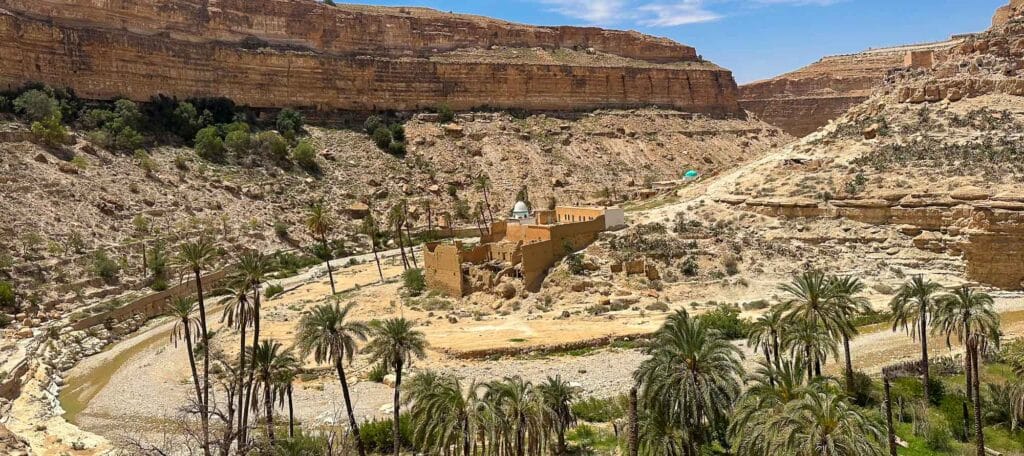
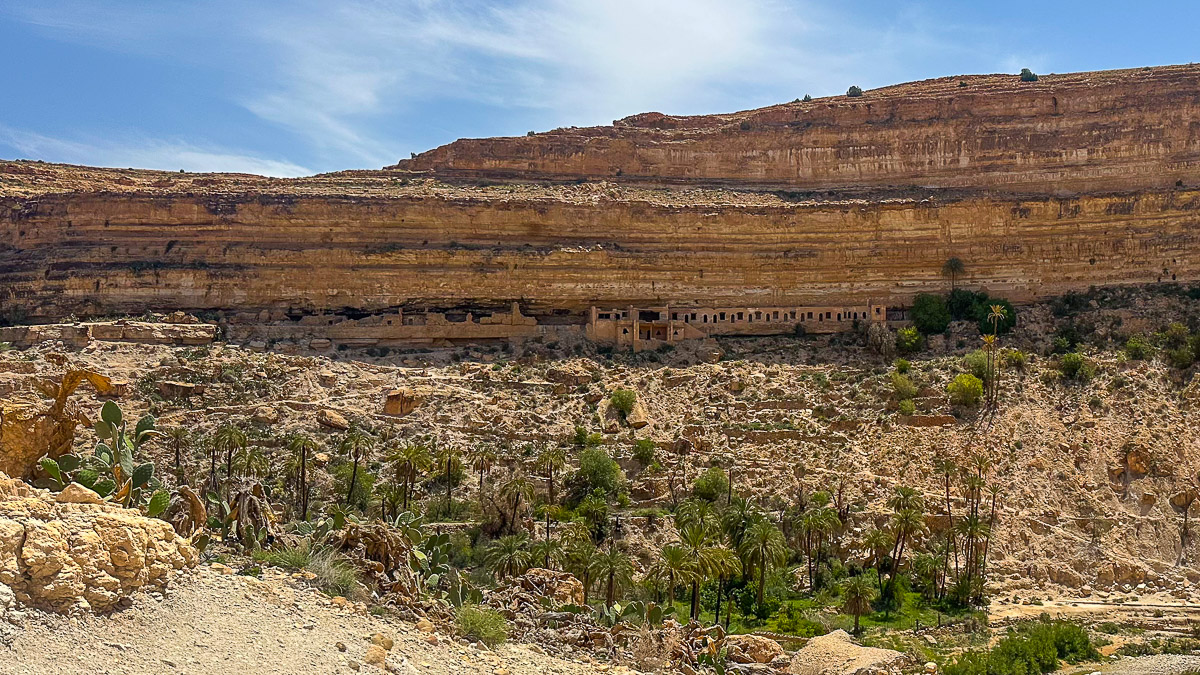
The ruins above leave no ambiguity. Wooden roofs disappeared long ago, but the stone walls remain, solid and readable. The village is still there, legible in the landscape. The abandoned hotel carved directly into the cliff is something else entirely. Built into the rock, it feels permanent. Stone, concrete, and mountain merged together. That structure will still be there long after many things disappear.
There was never any question of staying at the top as a simple observer. Everything in me was pulling downward. Touching the stone. Walking along the river. Reaching the hotel carved into the cliff face. I did not hesitate for a second — not going down, and not coming back up either.
The first section of the descent is accessible, almost tourist-friendly. Then it becomes steeper, more physical. The last two hundred metres are completely off-trail. Everyone chooses their own path. To reach the abandoned hotel, you follow what is essentially a goat trail. Without proper shoes and experience on rough terrain, this is not a place to improvise.
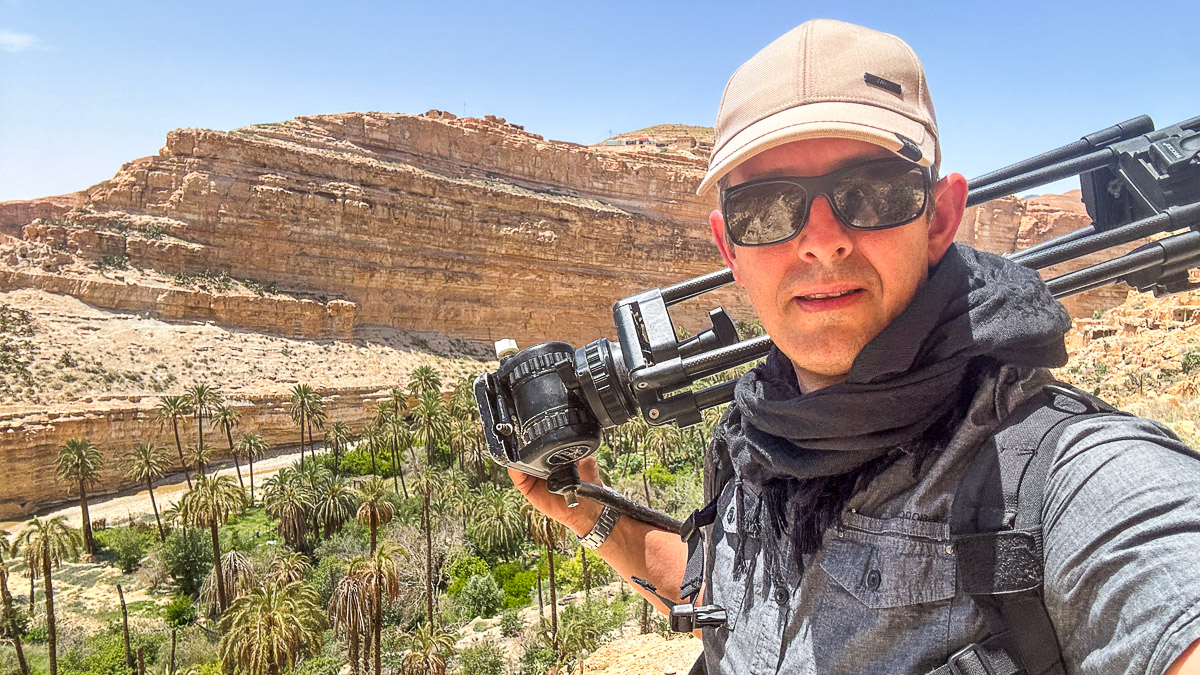
What strikes me most during the descent are the steps carved directly into the rock — deliberate, patient, permanent. I think about the people who built them. The effort. The patience. The time it must have taken. It is warm, but I descend slowly, fully present. The silence is powerful — broken only by the sound of our boots on stone. Rabah and Sofiane move ahead. I fall behind, photographing, filming. I often say that travelling with a cinematographer is the worst idea: we stop constantly, absorb the atmosphere, analyse the light, wait for a moment to settle.
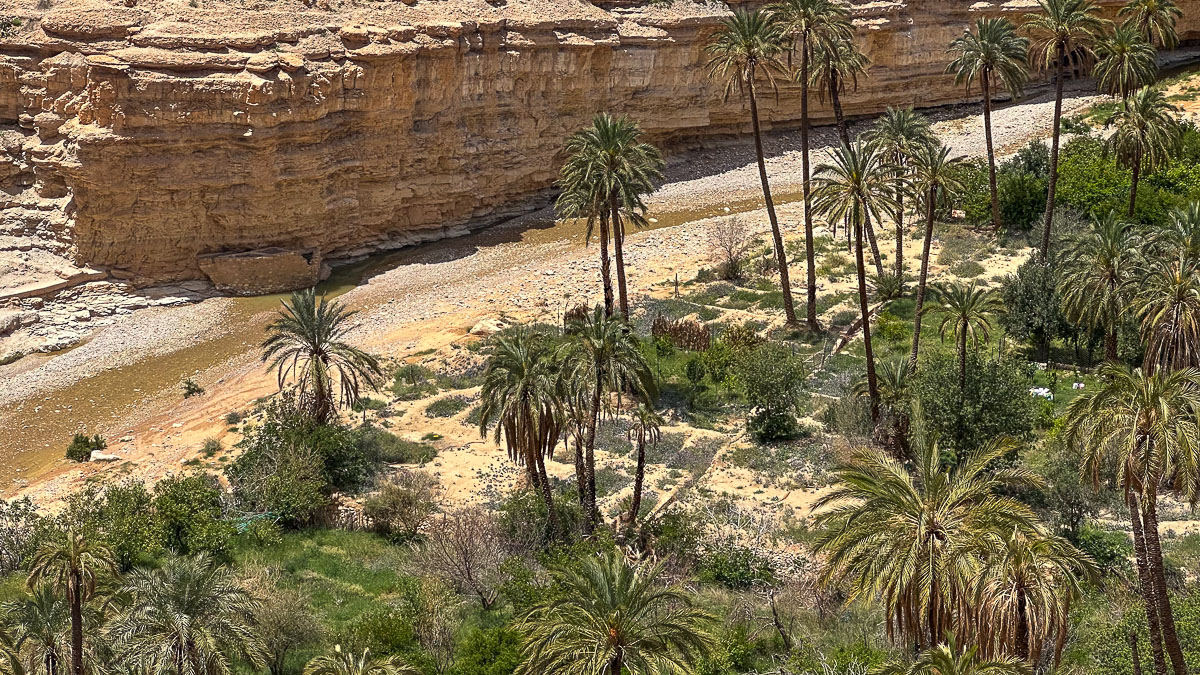
The exact moment I know we are truly inside the canyon is when I step into the river. I look at the water, where it comes from, where it goes. Only then do I lift my eyes toward the canyon walls. The perspective is overwhelming. A natural wide-angle effect. The cliffs curve and wrap around us. The space feels ancient, protective, immense.
At the bottom, life has not disappeared. Small cultivated plots. Vegetables growing. At least one inhabited home. This surprises me, and it moves me. I personally would not choose to live here — but from a survival perspective, it makes perfect sense. Natural protection, immediate access to water, deep knowledge of the land.
This is the moment when Ghoufi fully reveals itself as a cinematic space in my mind. I imagine historical films, medieval-era stories, soldiers moving through the canyon. Then quieter scenes — love stories unfolding by the river, framed by towering cliffs. The location allows everything: fiction, documentary, pure observation.

Before leaving the depths of the canyon, one last ascent draws our attention. Carved directly into the rock face is the remains of an old hotel, partially embedded in the cliff itself. Built during the colonial period, this establishment was once considered a notable destination, offering visitors a rare privilege: living inside the canyon rather than merely observing it from above. Today, only the structure remains — stone, concrete, and void — but the intention is still readable. From its openings, the view over the canyon is extraordinary, commanding both the river below and the immense vertical walls that frame it. Accessing this site requires following narrow goat paths, steep and irregular, where balance and experience matter more than comfort. The difficulty of reaching certain locations only amplifies their impact. Each step rewards the effort with views that feel earned rather than given.
Nearby, another structure stands in silence — a long-abandoned building resembling a small mosque or place of gathering. Its purpose is no longer clear, but its presence reinforces a simple truth: this canyon was once inhabited, organised, lived in. These traces of architecture, scattered and eroded, add a human scale to the immensity of Ghoufi, reminding us that this landscape has long been shaped not only by erosion and water, but by belief, community, and daily life.
A Note for Producers
Ghoufi is not a location that needs to be transformed or dressed. It already carries scale, depth, history, and life. From high-access viewpoints to fully immersive canyon environments, the area allows for controlled logistics while offering rare visual authenticity.
For productions seeking landscapes that feel untouched yet readable, cinematic without artifice, Ghoufi offers a rare balance. It is the kind of place we look for when developing projects through Film in Algeria: locations that respect the story, the crew, and the territory itself. Fiction or documentary, intimate or epic, Ghoufi provides a cinematic language that feels both timeless and grounded — a place where stories naturally belong.
Looking back at the images today, the first thing that returns is not just beauty — it is sensation. The pull I felt from the top. The quiet insistence of the hotel carved into the rock, visible from afar like an anchor point in the landscape. The need to go there, to stand where others once stood, to share the same perspective they had over the canyon when the hotel was still alive. And below, the river — still flowing, still shaping everything, indifferent to time.
That day at Ghoufi remains one of the most powerful moments of my time in Algeria — not because of spectacle, but because of coherence. Everything is exactly where it should be: stone, water, human presence, memory. It is a place that does not ask to be transformed, only understood.
I will return. This time, to film.